
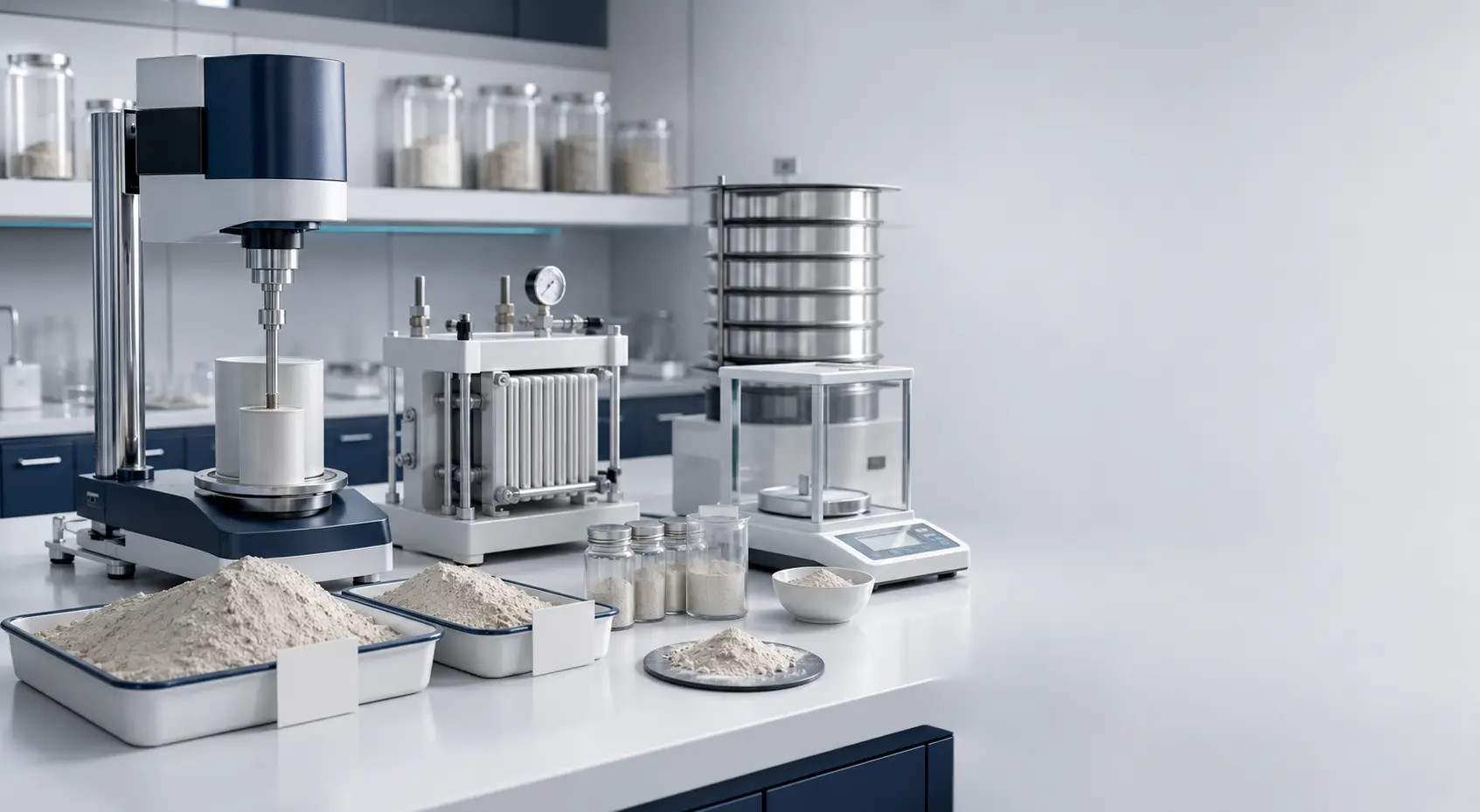
API and OCMA are related drilling-bentonite references, but they are not identical grades. The useful question is not “which one is better?” but which reference matches the purchaser specification, drilling conditions and acceptance procedure.
What Should You Evaluate?
- R600 and rheological balance rather than a single funnel-viscosity number.
- Filtration performance under the applicable laboratory method.
- Residue above 75 µm and the purchaser’s tolerance for coarse material.
- Whether the requirement is a laboratory reference, a contractual product specification or a formal certification requirement.
Practical Approach
Compare the parameters side by side. API uses the tighter YP/PV and filtrate reference, while OCMA uses the tighter >75 µm residue limit. A sample can therefore sit inside one reference on a parameter and outside the other on another parameter. Use the Bentonas Lab & Standards comparison page for the current numerical reference table and test-method context.
Common Mistakes
- Calling one grade universally “higher quality”.
- Using a single R600 or Marsh-funnel value as a complete qualification.
- Treating a reference comparison as API certification or API Monogram authorization.
Selection / Diagnostic Logic
Start from the customer or tender requirement. If no grade is specified, define the application, make-up water, target rheology, filtration need and coarse-solids tolerance first, then select the Bentonas grade that fits those conditions.