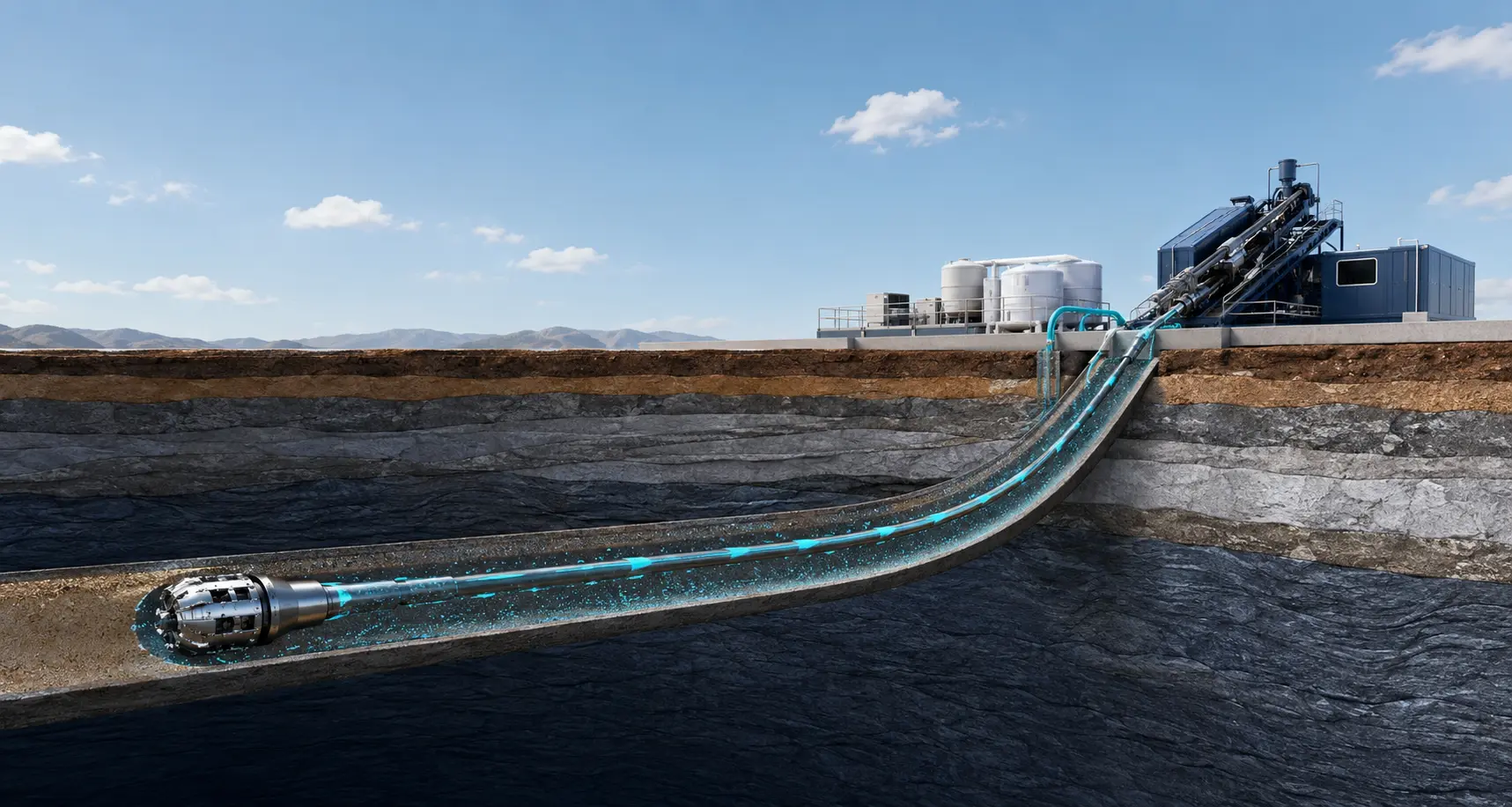
HDD bentonite selection should start with geology and hydraulics, not with the question “which product gives the highest viscosity?” A useful HDD fluid has to transport cuttings, support the bore, control filtration and remain pumpable through the planned circulation system.
What Should You Evaluate?
- Formation type: sand, gravel/cobble, reactive clay or mixed ground.
- Bore length, diameter, reaming stages and expected annular volume.
- Make-up water quality and whether conditioning is needed before hydration.
- Pump capacity, pressure trend, returns quality and cuttings-loading risk.
- Required suspension and filtration behavior.
Practical Approach
For routine freshwater conditions, Bentonas Regular is the balanced starting point. PLUS provides additional operating flexibility where conditions vary. Hi-Vis is intended for stronger rheological and suspension performance when justified by testing. MaxVis HDD is application-engineered for demanding HDD conditions. The correct step up is based on project data, not on a “stronger is always better” assumption.
Common Mistakes
- Selecting by Marsh funnel alone.
- Using excessive viscosity that the pump and annulus cannot move efficiently.
- Ignoring water hardness and salinity before mixing.
- Trying to solve poor returns by adding more product without checking losses, solids loading and annular velocity.
Selection / Diagnostic Logic
Define geology → water → geometry → pump capacity → target rheology/filtration. Then run a representative laboratory or field-mix check and select the lowest-complexity grade that meets the operating window.