
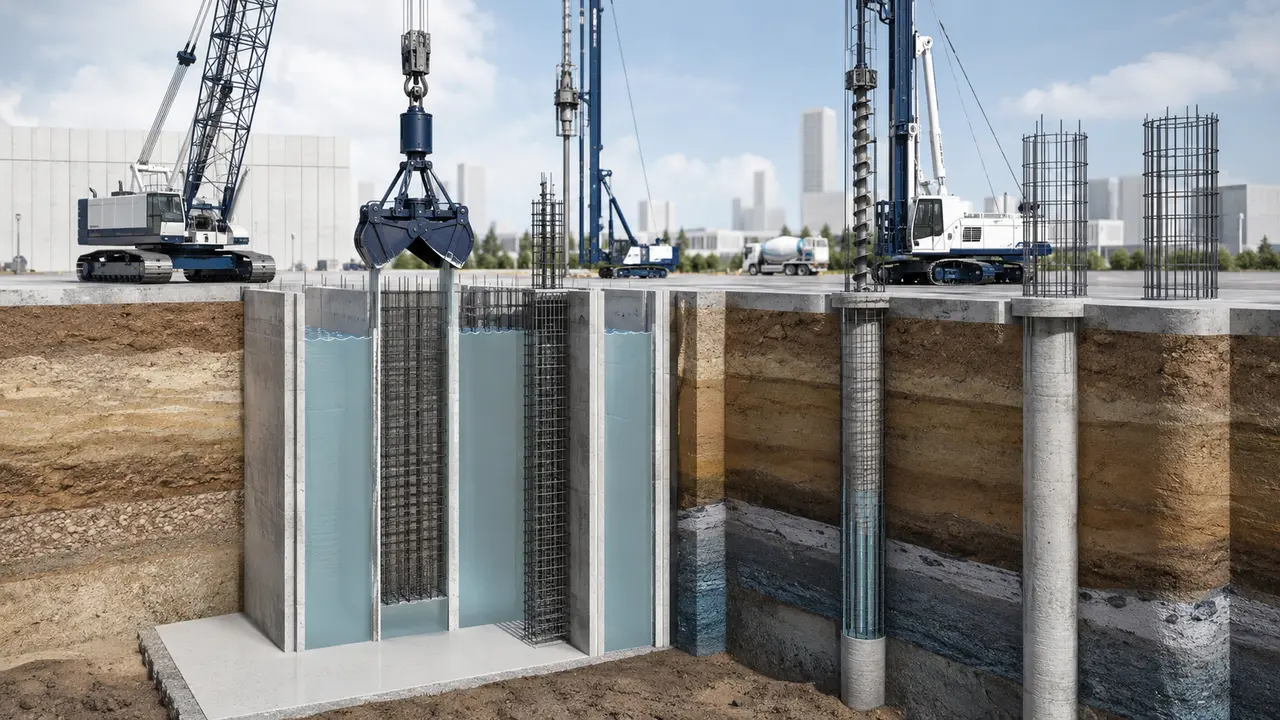
Construction bentonite is selected for support-fluid behavior rather than drilling-fluid branding. In bored piling, diaphragm walls and tunneling, the suspension must remain stable, pumpable and capable of supporting the excavation under the project’s soil and recycling conditions.
What Should You Evaluate?
- Suspension stability and resistance to excessive settlement.
- Rheology and gel structure appropriate for the excavation and circulation system.
- Filtration and filter-cake behavior in the actual soil.
- Pumpability, desanding/recycling behavior and contamination tolerance.
- Fresh-slurry and reused-slurry control strategy.
Practical Approach
Test the bentonite with the project water and representative soil contamination. Track density, rheology, filtration and solids as the slurry is reused. Bentonas Construction should be evaluated as a system component for diaphragm walls, bored piles and tunneling—not as a generic “higher viscosity” product.
Common Mistakes
- Selecting only by fresh-slurry viscosity.
- Ignoring the effect of excavated fines and reuse cycles.
- Allowing excessive solids to accumulate because the slurry still “looks thick”.
- Publishing unsupported compliance claims instead of checking the project specification.
Selection / Diagnostic Logic
Base selection on the project specification, soil, plant and recycling loop. The target is controlled support-fluid performance through the working cycle, not maximum viscosity.