
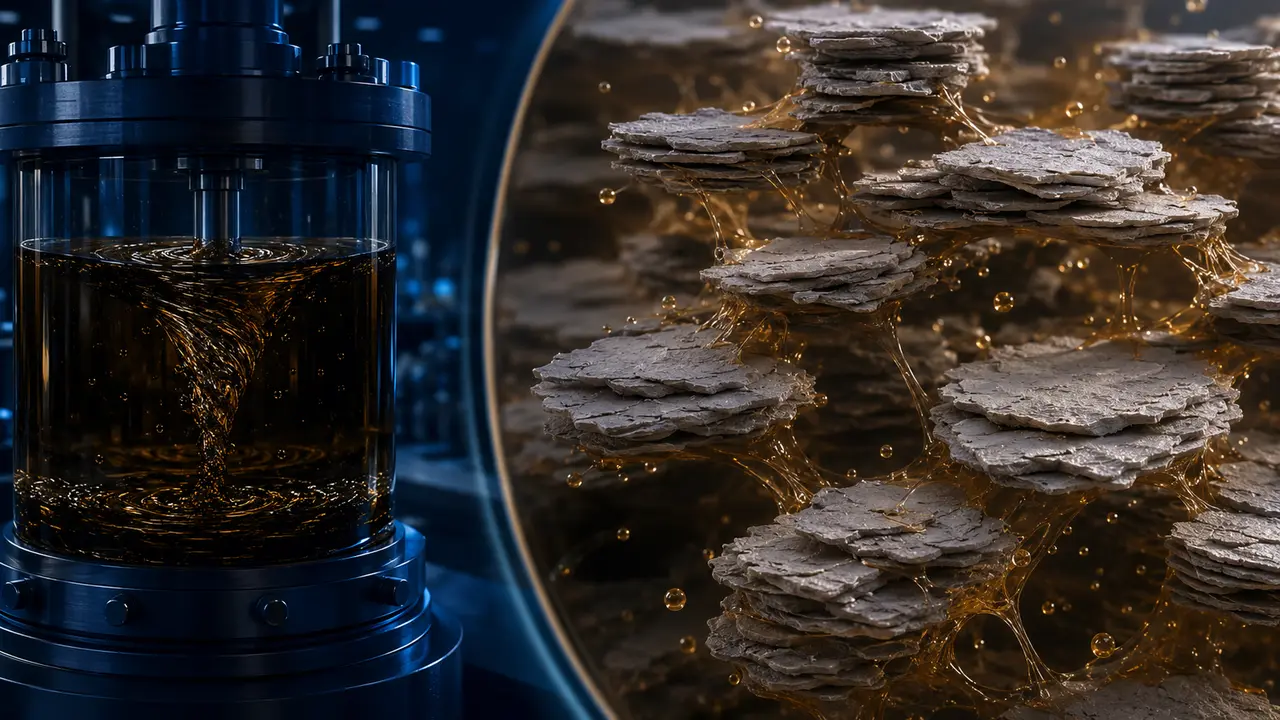
Organophilic clay is a rheology and suspension additive for non-aqueous drilling fluids. It is chemically modified so the clay can develop structure in an oil-dominant continuous phase.
What Should You Evaluate?
- Base-oil polarity and the activation environment required by the selected organoclay.
- Target low-shear rheology, gel structure and suspension.
- Solids loading and weighting-material suspension.
- Temperature and shear history.
- Compatibility with the complete emulsifier/wetting package.
Practical Approach
Treat organophilic clay as one part of the oil-based drilling-fluid rheology package. Optimize concentration with the actual base oil and full formulation. Too little structure can allow settling; too much can increase plastic resistance and pumping pressure. Bentonas Organo is positioned specifically for non-aqueous/oil-based drilling-fluid rheology and suspension.
Common Mistakes
- Calling organophilic clay an emulsifier or wetting agent.
- Testing it only in mineral oil without the intended full formulation.
- Assuming more clay always improves sag control.
- Ignoring activation chemistry and shear.
Selection / Diagnostic Logic
Define the oil phase, emulsifier package, solids/weighting level, temperature and rheology target, then test organoclay concentration in the complete system.